
Building long-term flood resilience: how Ostend and Flanders are rethinking approaches to climate adaptation
Across Belgium’s North Sea coastline, erosion, heavy rainfall, storms and rising sea levels are putting the region of Flanders and its citizens increasingly at risk. In densely populated urban areas dominated by concrete surfaces like Ostend, flooding in particular is becoming a concern.
In our Belgium Climate Adaptation Lab, SMARTER researchers, along with representatives from the city of Ostend and the Flanders regional government, are working on new strategies to build resilience to flooding, starting in the Vuurtorenwijk neighbourhood of Ostend, then in Flanders’s Middenkust region, before scaling up across other parts of the region.
We recently met with Karolien Vermeiren, Timo Wyffels and Dagmar Janssens, to discuss how collaboration between the City of Ostend and regional authorities in Flanders, along with co-design between SMARTER climate adaptation experts and local residents, can support long-term, sustainable climate adaptation solutions for the region.
Why do we need to rethink how we develop climate adaptation solutions?
We’ve been seeing the impacts of climate change here in Belgium for a long time – in Ostend, sea level rise is accelerating with rates measured since 2015 of 5mm+ per year, and severe flooding becoming more frequent across the whole Flanders region. This not only puts the city at risk, but local residents and businesses too.
The Vuurtorenwijk in Ostend, where we’re starting work in the Climate Adaptation Lab, is a densely populated and developed neighbourhood bordering the Ostend harbour, meaning it’s an important area for the city’s economy and for housing for local workers. Because of this, climate adaptation measures must also take into account increasing population density and the need for space dedicated to economic activity, as well as what benefits the local environment.
Some adaptation solutions have already been implemented in the Vuurtorenwijk. For example, the “City River”, (a channel designed to concentrate and convey stormwater runoff) has been installed in the northern part of the district as part of a new housing development. While this is, in theory, a good solution — it’s a closed system that tackles flooding, retain rainwater and has been positively received by residents — it has not been as effective as originally expected. This is because the soil in the area already has a relatively high infiltration capacity, and so it is more limited as a sealed subsurface structure, rather than contributing more to the greening of the area.
Similarly, a bioswale in the southern part of the district improved BlueGreen space in the area. But, it was not properly integrated into the design of the surrounding streets and houses, which are still integrated into the sewage system, limiting the effectiveness of this solution. As a result, the bioswale does not perform to its full potential, as would be expected from a more integrated approach, such as a well-designed rain garden system.
These adaptation solutions aren’t ineffective because they’re bad solutions. Rather, it’s because they haven’t considered how they fit within the wider neighbourhood, ecosystems and social systems. To ensure that adaptation measures can cope with the increasing impacts of severe weather events and can be sustained in the long term, we must rethink how we plan and develop these solutions so that they take these aspects into consideration.
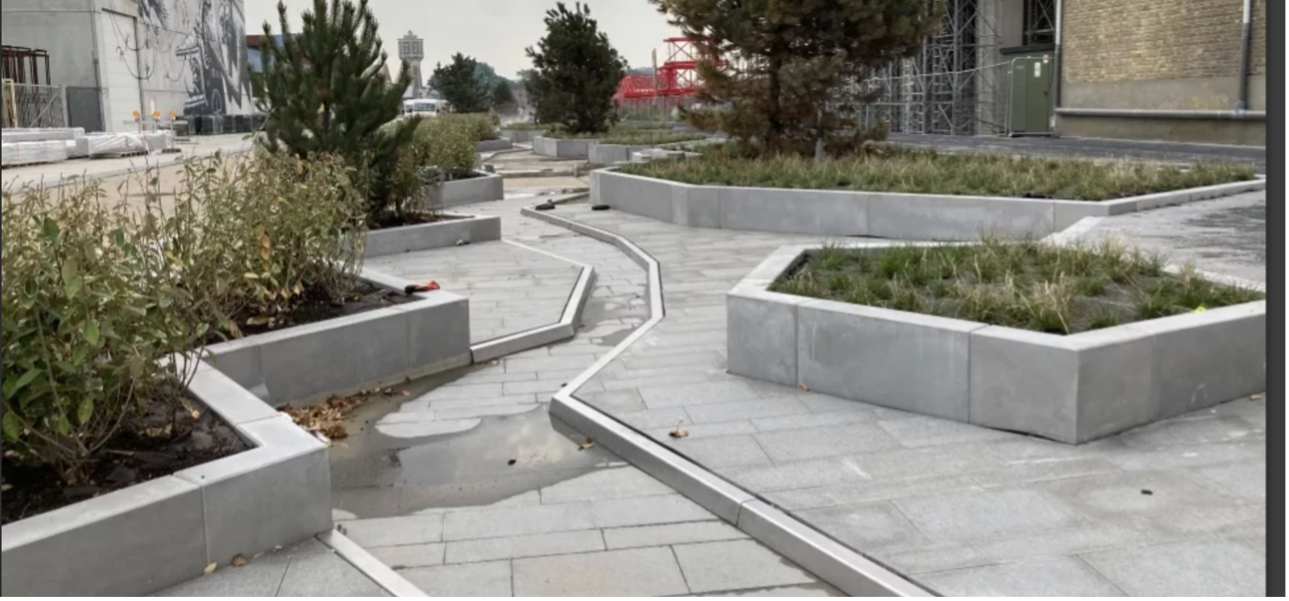
The ‘City River’ in the new Oosteroever development in Ostend was installed to tackle flood risk, however the substrate of the soil in the area meant that it was an ineffective location for the solution.
How can we ensure adaptation solutions are effective and sustainable in the long term?
We know that, from a governance and urban planning perspective, the logical solution to tackle flooding is to de-pave and expand green areas. However, when these solutions don’t consider the wider systems, surrounding areas and needs of residents, they aren’t always effective in the long run.
So, in our Climate Adaptation Lab we aren’t focused on developing one specific physical solution as such, but rather we want to create a process that facilitates the planning of strategic, systemic solutions. We’re doing this by using causal loop diagrams to conduct an analysis of all the systems and factors that influence different climate adaptation measures. This way, we’re able to identify the most effective areas to create green spaces, as well as identifying and minimising any negative impacts that these might create.
This analysis must also be considered alongside the opinions and needs of the neighbourhood's residents. For example, in the Vuurtorenwijk, feedback from local residents found that green spaces aren’t necessarily popular – they want to prioritise more safe space and security (which they don’t feel green areas provide) and more space for cars. So, for climate adaptation solutions to truly be sustainable in the long run, it is precisely a systemic approach that is needed that takes into account all the multiple variables.

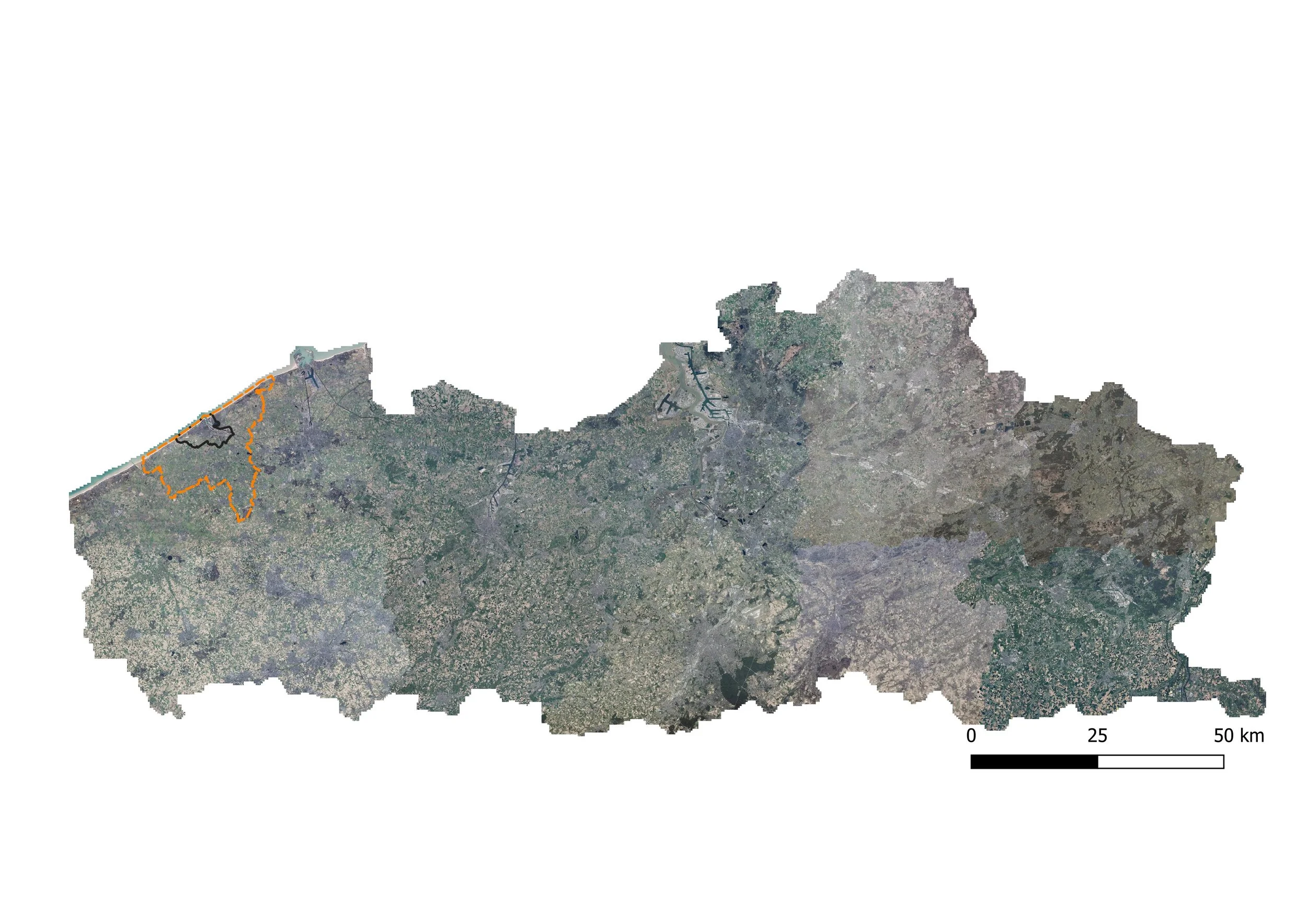
Ostend water basin
How does collaboration between the city level and regional government play into this?
Having both the local government in Ostend and the Flemish regional government involved in SMARTER is key for overcoming a common obstacle in adaptation planning, namely the challenge of working across different scales and sectors. Because both institutions are involved in SMARTER, we’re able to progress more efficiently and avoid duplicated work.
Also needing consideration are the more rural areas surrounding Ostend. Although there is more blue and green infrastructure, these areas of Flanders are equally at risk of flooding, and rural interventions, such as water capture and storage, are key to protecting livelihoods and agricultural production. And, while these interventions take place outside of the city’s mandate, by regulating and slowing the flow of water, Ostend also benefits from these flood resilience measures.
So, this collaboration complements our approach by overcoming planning obstacles and enabling us to incorporate new aspects into our climate adaptation solutions. This, coupled with our systems and analysis and co-design with local residents, will allow us to think more strategically about climate adaptation in the long term, so that SMARTER’s solutions are able to continue and be replicated beyond the end of our project.