
Climate adaptation in Europe: how can we translate EU strategy into local action?
2025 is on track to be the third consecutive hottest year on record. This year has been marked by increasing extreme weather – from devastating wildfires across Mediterranean countries to intense flooding in south-eastern Europe, evidence of the climate crisis has never been clearer.
Climate adaptation has often been overlooked by researchers, governments and policymakers, who have instead prioritised measures to mitigate the climate crisis and to lower greenhouse gas emissions. Although progress has been made since the adoption of the EU’s Adaptation Strategy in 2021, European cities and regions are still struggling to anticipate, cope with, and recover from the impacts of climate change.
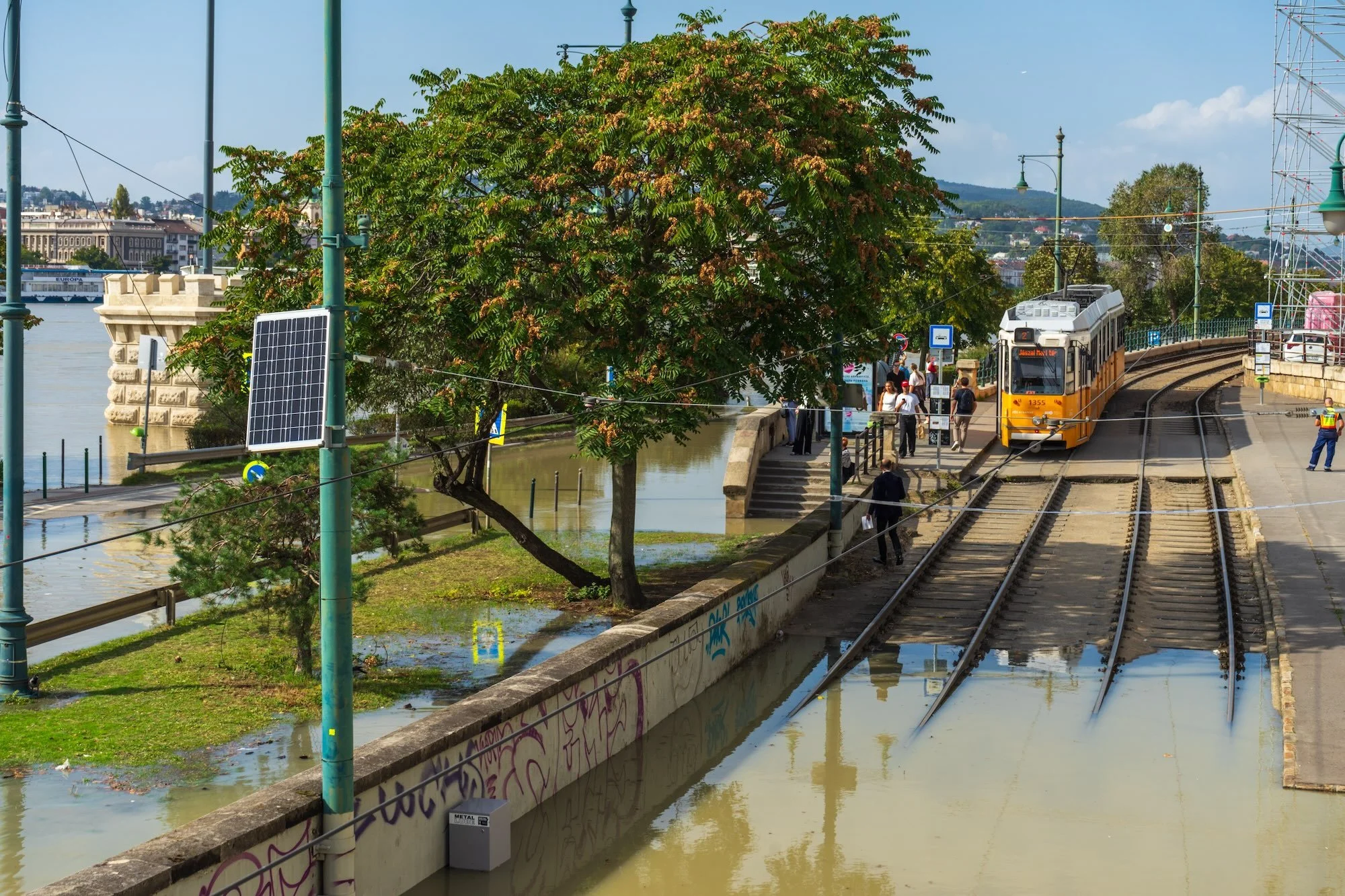
Floods in Budapest reach tram tracks on the Pest embankment (Credit: Arpasi Bence/Shutterstock.com)
But, as climate impacts become increasingly unavoidable, bringing with them serious risks not just for nature, but for people and the economy too, climate adaptation efforts must be strengthened urgently. In order to achieve full climate resilience, it’s essential that adaptation efforts are locally and community-led, while also aligning with national and EU strategies and supporting other policy domains.
What is the EU’s approach to climate adaptation?
In 2021, the EU adopted its Adaptation Strategy. In its first update since 2013, the strategy aims for the EU to become fully climate resilient by 2050, confirming Europe’s high vulnerability to the impacts of the climate crisis and the pressing need for action.
To achieve its goal, the EU Adaptation Strategy outlines four key objectives:
To speed up adaptation by increasing funding for climate action by 30% and switching emphasis from awareness raising and policy development to providing physical adaptation solutions.
To improve climate adaptation knowledge and manage uncertainty by translating climate information into accessible, user-friendly tools.
To support policy development at all levels and sectors by mainstreaming and supporting implementation of adaptation strategies at all levels of governance.
To increase support for international climate resilience by motivating international finance for adaptation and strengthening global engagement and exchange.
While the Adaptation Strategy outlines international priorities, it also recognises that “the local level is the bedrock of adaptation” and that, to be successful, the EU must support local climate resilience. To put the strategy into practice, the EU Mission on Adaptation to Climate Change brings climate adaptation research closer to European communities and regions. By developing innovative solutions that can be used by local and regional authorities, increasing understanding of climate risks and unlocking investment in adaptation solutions from the private sector, the Mission enhances local and regional climate resilience.
As of 2025, all 27 EU Member States have now adopted adaptation policies, marking substantial progress in the four years since the launch of the Adaptation Strategy. As national climate laws increasingly aid the institutionalisation of adaptation policymaking and its governance, and climate risk assessments advance, the EU has gained significant momentum in prioritising climate adaptation.
What challenges are European cities and regions facing in the race to adapt to climate change?
Although the EU Adaptation Strategy and Mission have established important frameworks for climate adaptation and recognise the importance of local authorities in the implementation of adaptation measures, European cities and regions are struggling to turn climate plans and strategies into meaningful action.
Despite the increase in national and regional adaptation plans, a study has found that nearly half of these plans identify climate risks, yet don’t outline any concrete measures or actions to tackle them. Over 70% of these plans are also inconsistent or fragmented across different areas of policy, meaning their climate risk assessments, policy goals, adaptation measures and monitoring programmes are not aligned and don’t reflect the different ecological or socio-economic vulnerabilities facing the region.
Furthermore, although the EU has stated its commitment to support the local level, a survey of 400 municipalities across Europe found that nearly 70% were unaware of the EU Adaptation Strategy and tools. Many also used outdated scientific data in their local or national plans, meaning plans and actions may be misinformed and could lead to ineffective measures or maladaptation.
Regions and cities also often face conflicting priorities between adapting to climate change, security and defense concerns, and increasing economic growth. This may be due to opposing needs between climate adaptation measures and actions to encourage competition, or because adaptation is not thought to generate revenue for the region. This complicates and delays the process of implementing climate adaptation solutions considerably.
Consequently, progress towards Europe achieving full climate resilience is failing to keep pace with the rate at which climate disasters are impacting the continent. As climate risks intensify across Europe, threatening the EU’s competitiveness and Europeans’ way of life and wellbeing, we must find new and more efficient ways to implement adaptation strategies and plans that bring concrete, effective action at the local and regional level.
How the SMARTER project is advancing adaptation and building local climate resilience
To overcome these challenges and to translate the EU’s goals into tangible and implementable measures, it’s clear that local and regional authorities and EU-level policymakers and researchers can no longer work in isolation. SMARTER is addressing this by bringing the latest adaptation research, data and models to the local and regional level.
Across our network of Climate Adaptation Labs, leading researchers are working directly with local experts, stakeholders, policymakers and communities to ensure adaptation strategies and measures reflect local ecological and socio-economic needs. Through co-design and collaboration, municipalities and provinces in each Lab will have access to the latest scientific data and modelling to make better informed decisions, helping them to align climate adaptation with broader EU priorities, such as soil restoration, pollution reduction and healthier urban living, to more efficiently make use of resources and public investment.
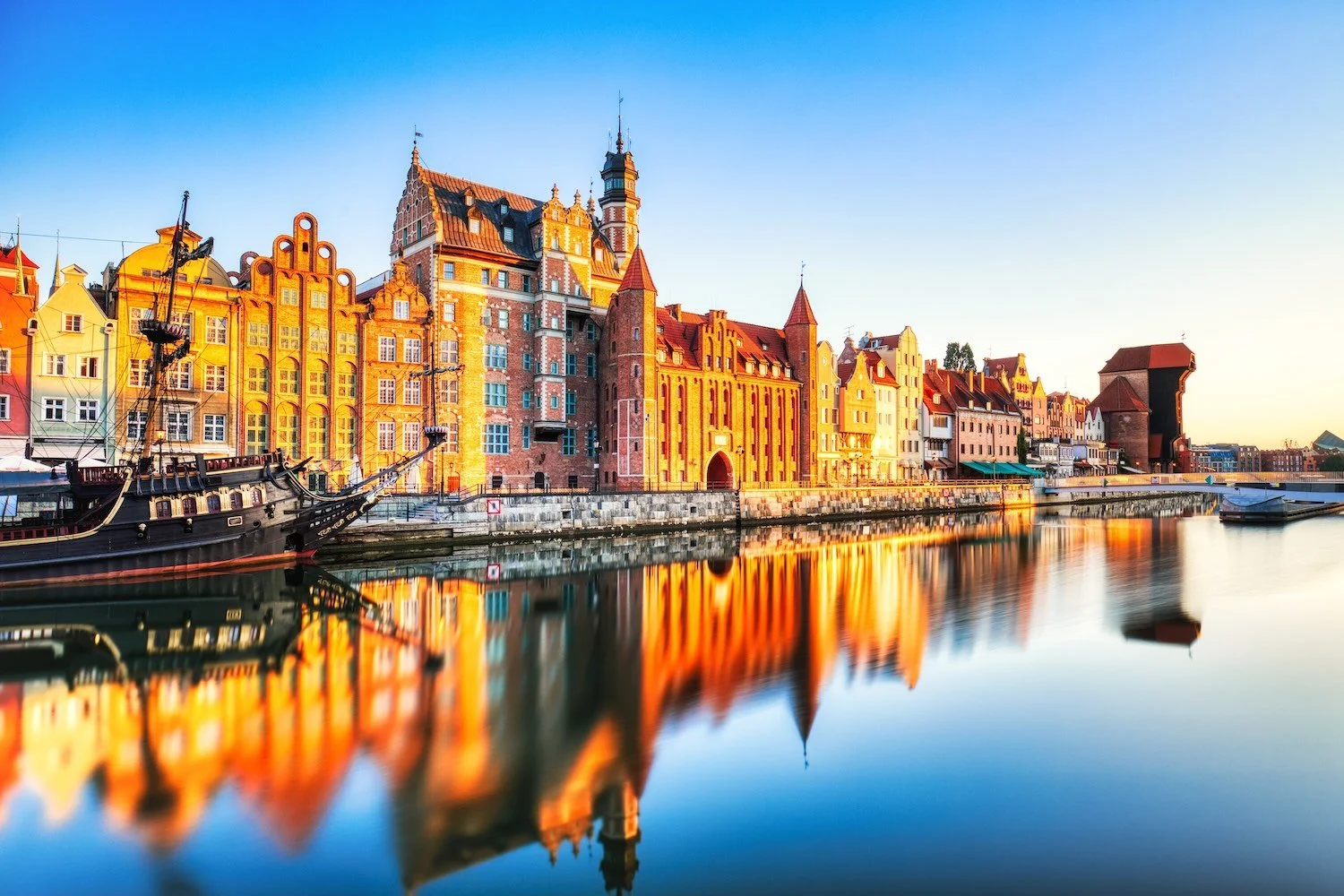
Like many coastal cities, Gdansk, one of our Climate Adaptation Labs, is facing increasing climate risks (Credit: Roman Slavik/Shutterstock.com)
In addition to the solutions developed, tested and implemented in our Climate Adaptation Labs, our easy-to-use and replicable tools will be made readily available to governments, urban planners, environmental professionals and other researchers in an online toolbox, bridging the gap between policy and action and supporting local and regional climate resilience beyond the SMARTER project.
“European regions and cities are not only adapting to increasing climate risks – they’re also responding to other EU requirements such as the Soil Monitoring Law, the Zero Pollution Ambition, the Urban Mobility Framework and the EU Health Strategy,” said SMARTER project coordinator Karolien Vermeiren. “By exploring integrated measures such as green-blue infrastructure, urban greening, active mobility networks and nature-based solutions, SMARTER is helping authorities navigate these overlapping obligations and turn them into opportunities not just for building climate resilience, but for integrated planning and shared benefits.”
Slow progress towards full climate adaptation and increasingly severe climate impacts have emphasised the need for more collaboration between the local and regional levels and the EU. If adaptation continues to be planned in isolation, cities and regions risk creating trade-offs, and even maladaptation. In 2026, the EU will adopt a new integrated framework for climate resilience and risk management, which will outline a clear approach to climate adaptation not just for the EU, but also for individual member states. Building on the foundations of this new framework and the Adaptation Strategy, SMARTER is advancing climate adaptation by providing regions and cities with the integrated tools, data and measures they require to respond effectively and systemically not only to the climate crisis, but also to other EU requirements on soil health, air and water quality, biodiversity recovery, sustainable mobility and public health.