
Blue-Green Infrastructure
In short: Blue-green infrastructure is a nature-based approach to mitigating climate hazards in urban landscapes by using water and vegetation-based elements.
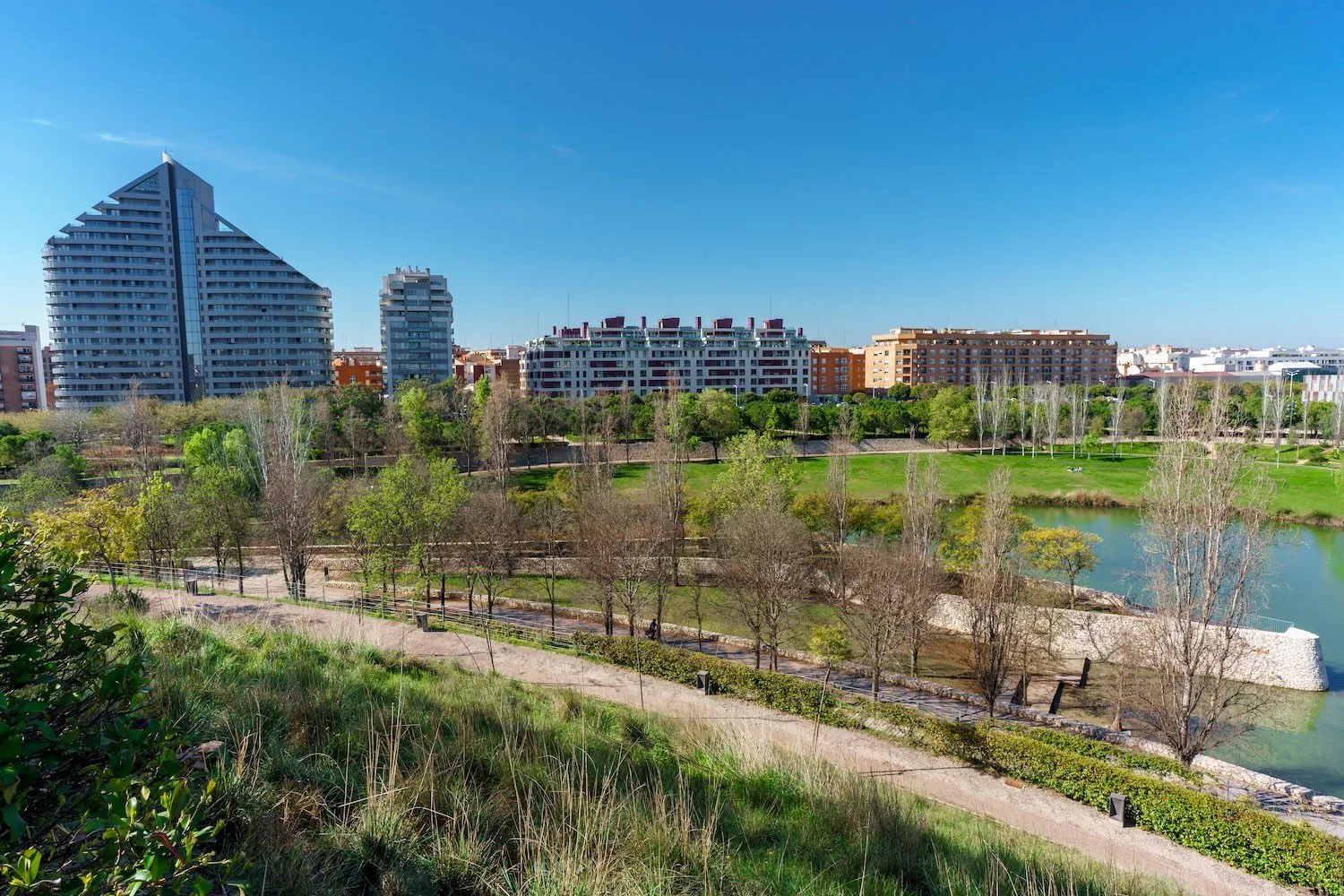
Blue-green infrastructure is a nature-based approach that integrates water-based and vegetation-based elements into urban landscapes to mitigate climate hazards while enhancing the connections between natural and social systems.
By combining semi-natural and engineered elements, blue-green infrastructure delivers multifaceted benefits such as stormwater management, water purification, heat mitigation and habitat provision. Rather than working against natural processes, it integrates hydrological functions with urban greening and spatial planning.
Although understandings on blue-green infrastructure can vary depending on professional discipline and contexts, the European Commission's Green Infrastructure Strategy provides the most widely referenced policy anchor. The strategy defines green infrastructure as a strategically planned network of natural and semi-natural areas designed that deliver a wide range of ecosystem services, one that explicitly incorporates both green land and blue water spaces.
Related blogs
Sources
Emily O’Donnell et al. — Managing flood risk in blue-green cities
Kilian Perrelet, Marco Moretti, Andreas Dietzel, Florian Altermatt and Lauren M. Cook — Engineering blue-green infrastructure for and with biodiversity in cities
Ian Mell, Alister Scott, Carla-Leanne Washbourne, Claire Wansbury — Definitions and context of blue-green infrastructure