
Nature-based solutions at the forefront of sea level rise and flood resilience in the Lisbon Metropolitan Area
In the first months of 2026, Portugal was hit with a sequence of storms that destroyed homes and infrastructure, left thousands without electricity, and caused the deaths of at least 16 people, bringing to light the urgency with which Portugal must adapt to increasing extreme weather caused by climate change.
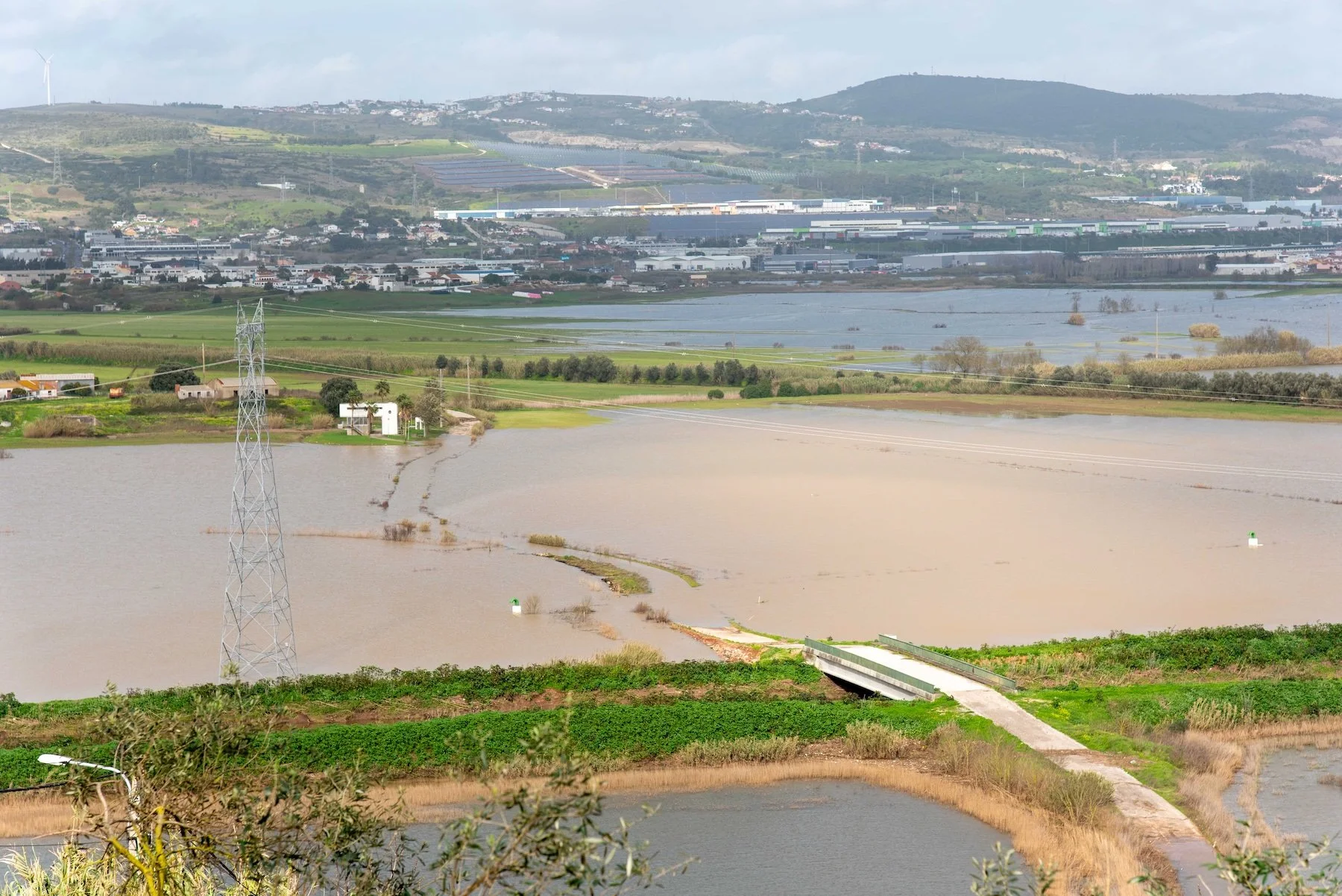
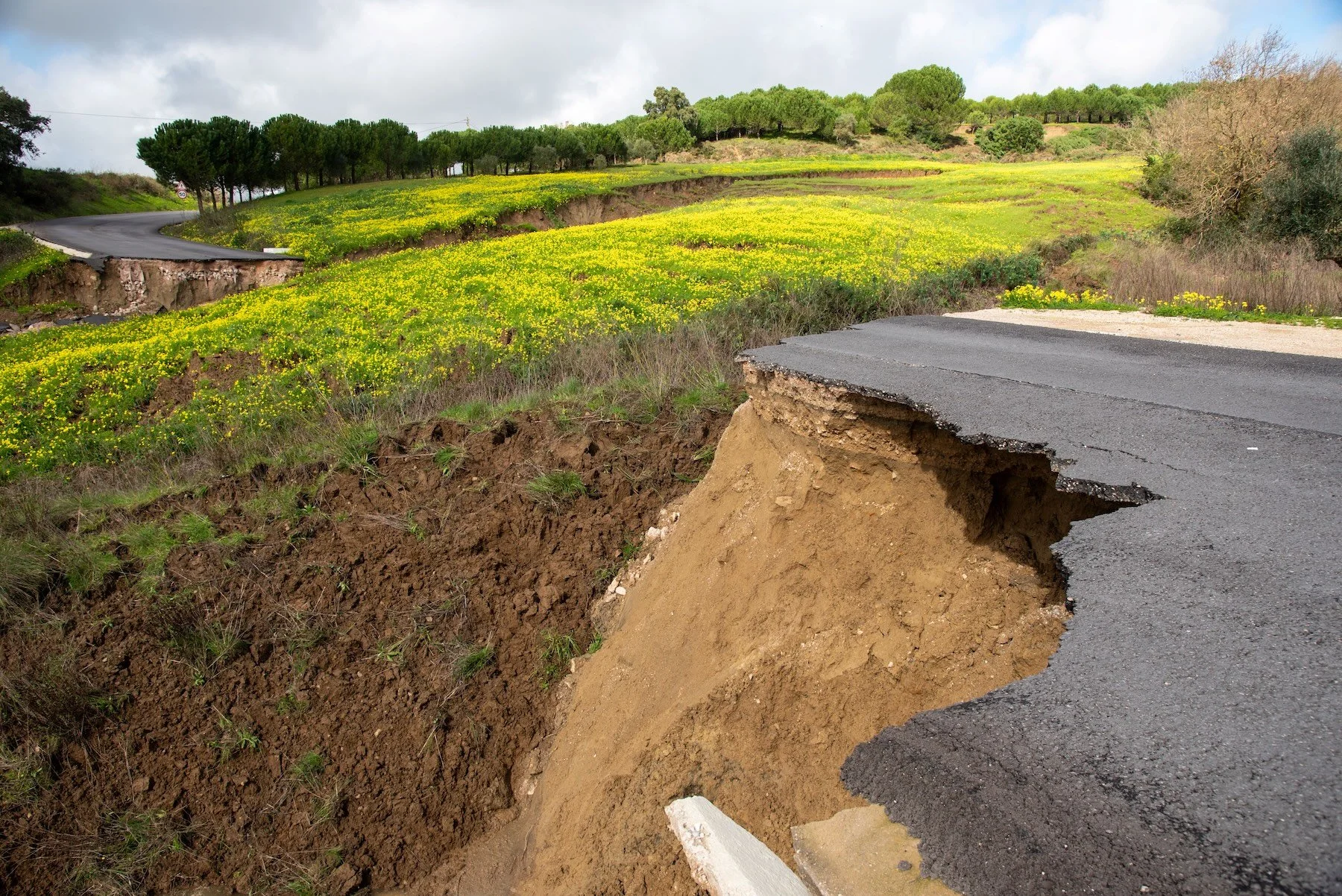
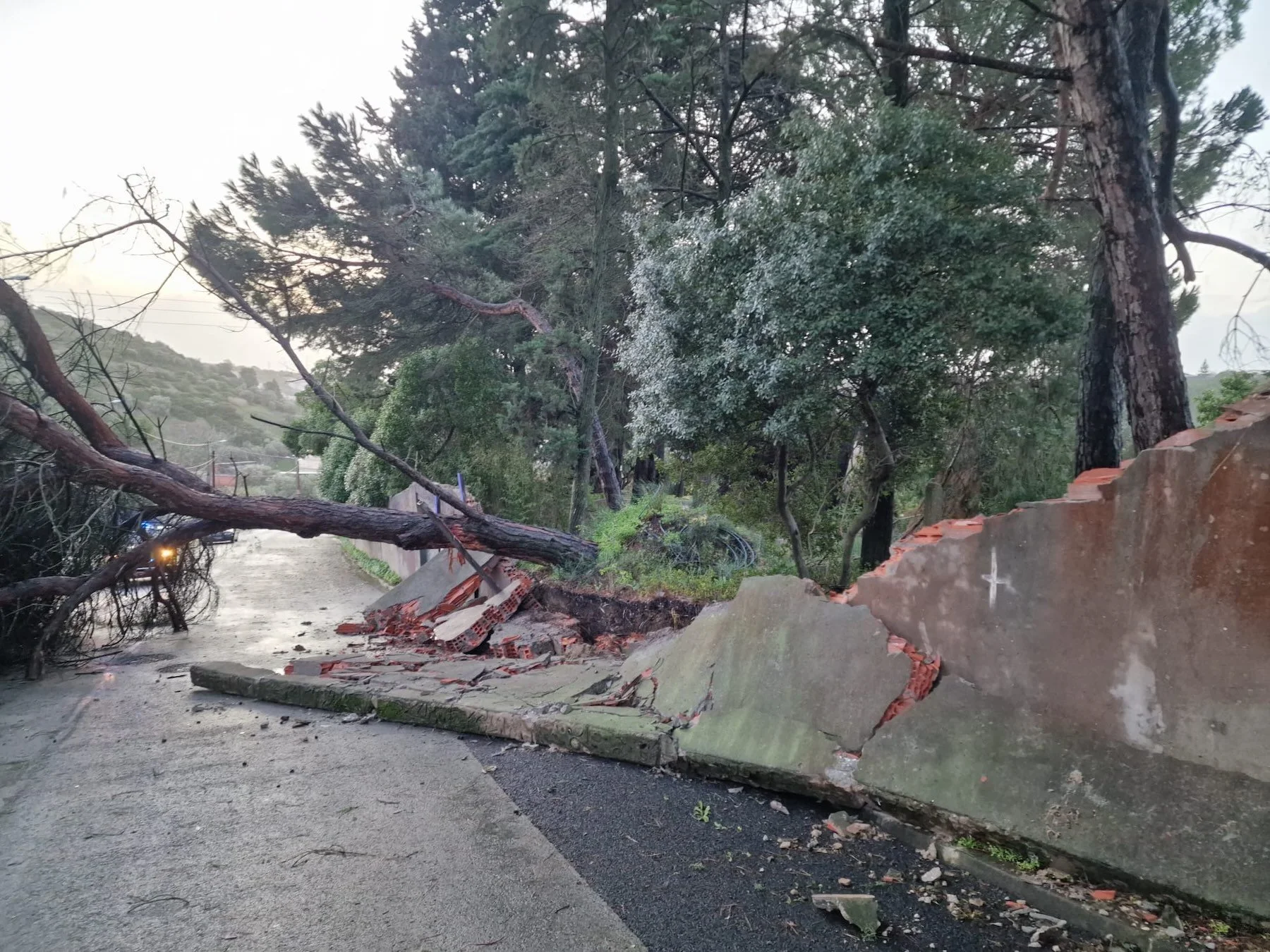
Portugal is one of the countries most impacted by climate change in southern Europe. The increasing risk of wildfires, coastal erosion, droughts and floods is significantly impacting water availability and crop productivity across the country. While many parts of Portugal are most threatened by drought and water scarcity, for the Lisbon Metropolitan Area, which is centred around the estuary of the Tagus River and the capital Lisbon, greater risk from sea level rise and flooding.
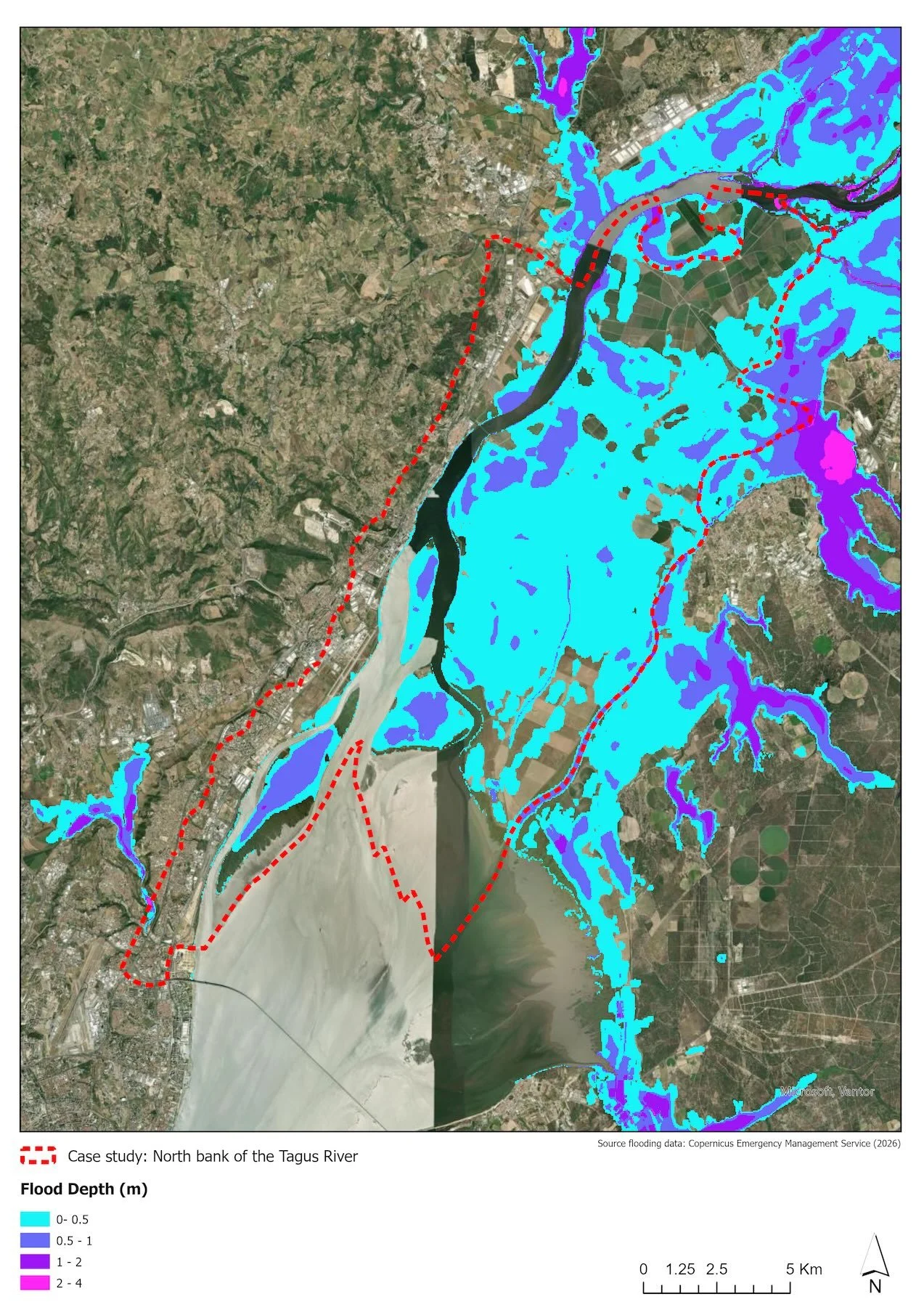
A map showing flood levels in one of the case studies (indicated by the red dotted line) from the Portugal Climate Adaptation Lab, following a series of storms at the start of 2026.
We recently met with Francesca Poggi, senior researcher in sustainability and socio-ecological systems at the Universidade Nova’s Interdisciplinary Centre of Social Sciences, and Catarina Castro Henriques, technicalspecialist at the Lisbon Metropolitan Area, to discuss how SMARTER’s Portugal Climate Adaptation Lab is building sea level rise and flood resilience by complementing existing engineered adaptation solutions with nature-based solutions.
How is the climate crisis affecting the Lisbon Metropolitan Area?
As the Lisbon Metropolitan Area continues to urbanise, with nearly 28% of Portugal’s population living in the region, drainage systems are under more pressure from increasing demands on services and infrastructure. At the same time, climate-induced extreme precipitation, increasing rainfall, sea level rise and unusual storms are adding to this pressure, putting us at risk of runoff velocity and overflows causing flooding. As we have seen at the start of this year, this not only impacts our water cycle and systems, but also has serious effects across other services, such as transport and energy.
However, this isn’t the first time we’ve experienced extreme rainfall and flooding in the region (and across the country). In response to the increased risks over the past decade, Lisbon City Council developed the Lisbon Drainage Master Plan to enhance flood resilience in the city. The plan involved the construction of two underground drainage tunnels to reduce surface flooding, protect residents and infrastructure, and prepare for future climate-related events.
Nevertheless, the severity of the flooding over the past few months has demonstrated how critical, yet limited, engineered solutions are - especially in urban waterfronts that are more vulnerable due to the risk of sea level rise. To build effective climate resilience, actions must be implemented quicker, and in a more coordinated way, with nature-based solutions at the foreground.
Why are you prioritising nature rather than traditional engineered solutions to build climate resilience?
While the built environment has increased in the Lisbon Metropolitan Area, green space has reduced over the last decade. Plus, the green spaces we do have are sparse and distributed unequally, which worsens climate and social inequalities and directly impacts public health, particularly amongst vulnerable populations. This deprioritisation of green (and blue) infrastructure puts the region more at risk of flooding, as urbanisation replaces natural, permeable surfaces with concrete or other materials that don’t allow rain infiltration.
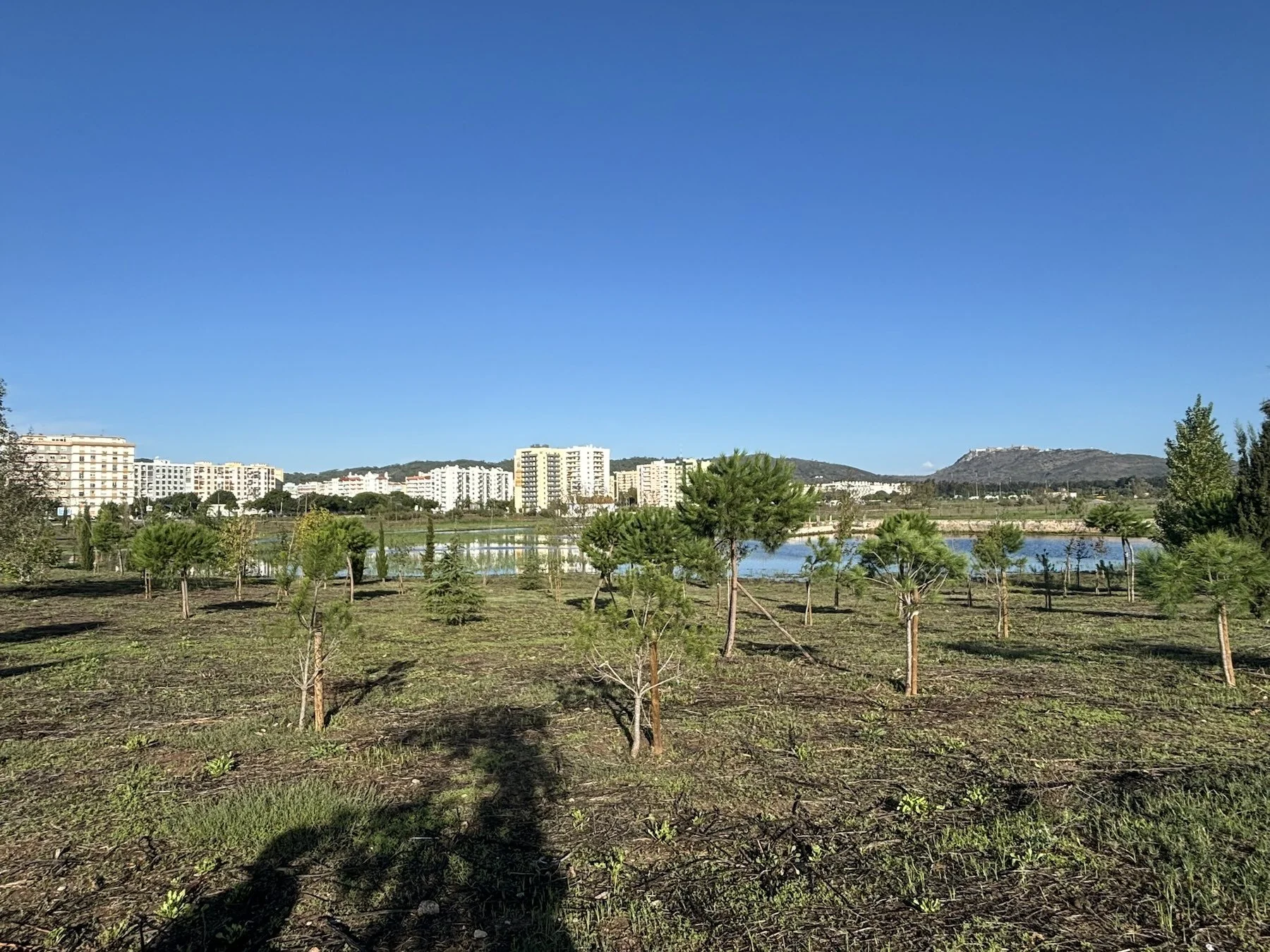
A retention pond in Setúbal, a coastal town south-east of Lisbon
Nature-based solutions have many values and benefits, not just for adaptation planning but also for communities, ecosystems and biodiversity. The extensive retention pond in Setúbal (shown in the image above), which also functions as a green public park, shows how a nature-based solution prevented flooding earlier in the year. So, in SMARTER’s Portugal Climate Adaptation Lab, we’re looking to complement existing engineered solutions with nature-based solutions to build climate resilience in the Lisbon Metropolitan Area.
In particular, we’re focusing on urban waterfronts given their more critical position due to future sea level rise. Through renaturalisation and greening strategies to reinforce existing ecological structures and green and blue infrastructure, we’re working to increase nature-based solutions that will improve absorption and storing of water and therefore decrease surface runoff and flood risk. Additionally, we don’t want these spaces to be stand-alone solutions – by creating natural corridors that connect different green spaces and bodies of water, we can increase the benefits for flood (and extreme heat) resilience and biodiversity and create better landscapes for local communities to enjoy.
What steps are you taking to implement nature-based solutions in your Climate Adaptation Lab?
The overall goal of our work in the Portugal Lab is for climate resilience and adaptation science to migrate from universities and research circles to policy and governance, where we can create real and actionable strategies to implement nature-based solutions. We’re working to identify urban areas at risk and the nature-based solutions that already exist, as well as which solutions can be developed to enhance the resilience of the region. To achieve this, we’re collaborating with stakeholders across the public and private sectors, academia, and civil society through co-design workshops. This ensures that the work in our Lab will be beneficial and inclusive across different groups of society.
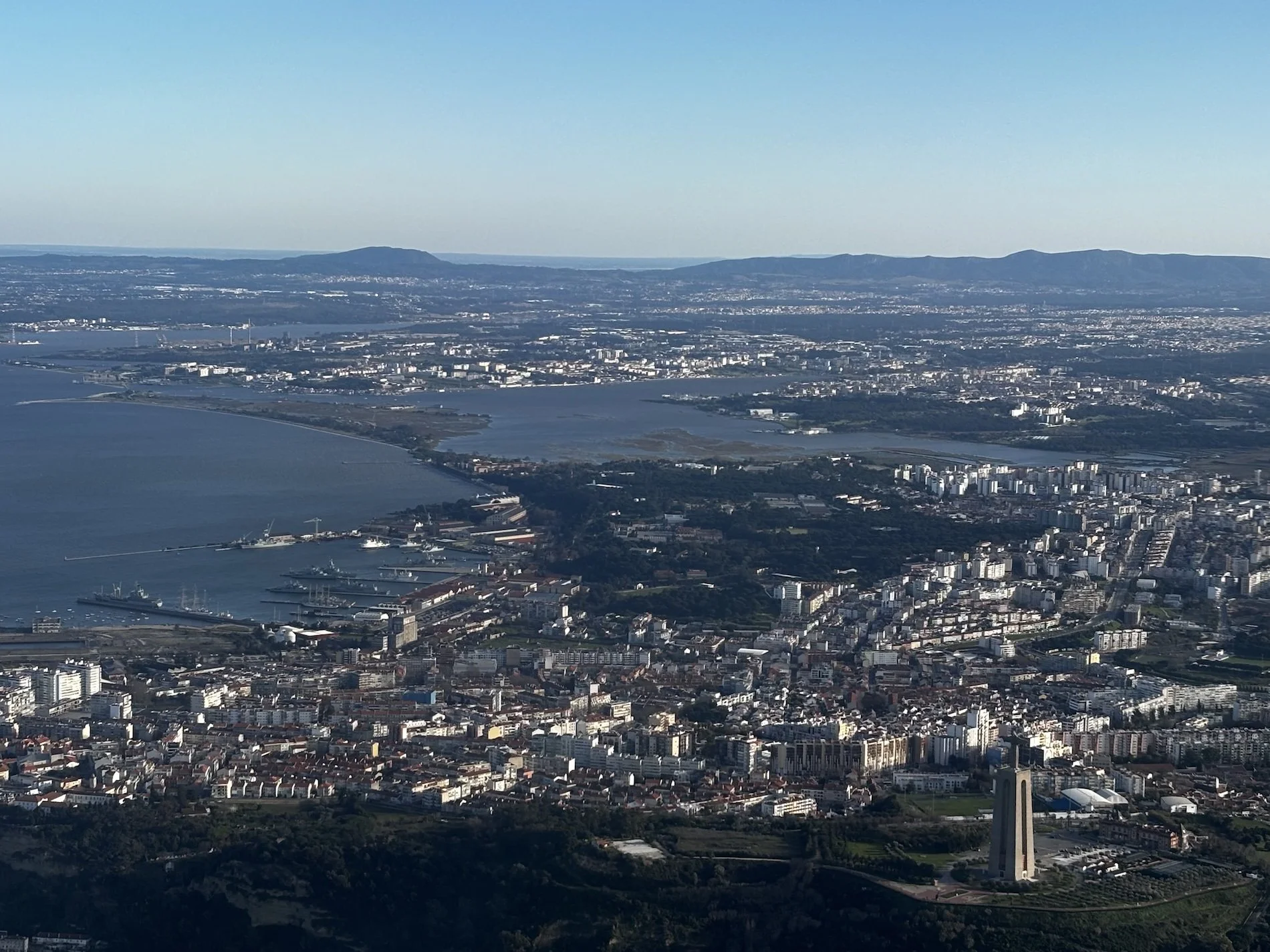
A view of the Lisbon Metropolitan Area from the south bank of the Tagus River
We’re also working with other coastal and estuarine Climate Adaptation Labs in the SMARTER project, such as Belgium and the Netherlands, to learn from the research and solutions being implemented in their regions. In particular, we are closely collaborating with the team in North Holland to learn how to use their land-use scanner tool so that we can create spatial forecasts for different types of land use in our urban waterfronts.
While we need to think about what can realistically be achieved in the three years remaining of the SMARTER project, we hope that, in addition to the real-world solutions that we implement, that our Climate Adaptation Lab will have a legacy beyond the project. Therefore, we’re developing a digital twin and spatial optimization tools to identify priority areas, including vulnerable populations, buildings, and infrastructure that are at risk of flooding. These tools, in addition to our co-design and capacity-building approach, will help municipalities and mayors have more awareness and knowledge of climate adaptation, so they are able to continue the work into the future.
What are your plans for 2026?
After a successful first few months in our Climate Adaptation Lab, we’re looking forward to continuing our work with our stakeholders to plan concrete solutions for climate adaptation. At the end of March, we will hold a workshop to discuss the cause-and-effect relationships of different variables around our main challenge of sea level rise and flooding. In a second workshop in April, these will be used to develop causal loop diagrams to understand how different aspects of a system are interrelated. Using the knowledge gained from both workshops, at the end of May we’ll begin to co-design a common vision for resilience in our region, which will anchor the solutions we develop throughout SMARTER.